The Pride of Mewar
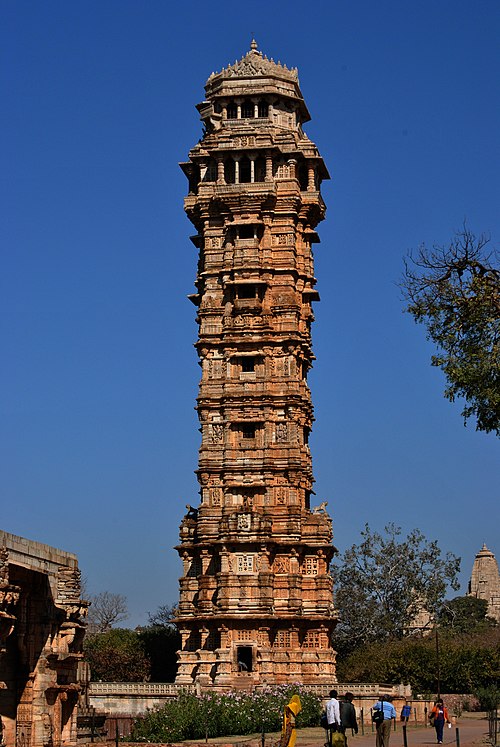
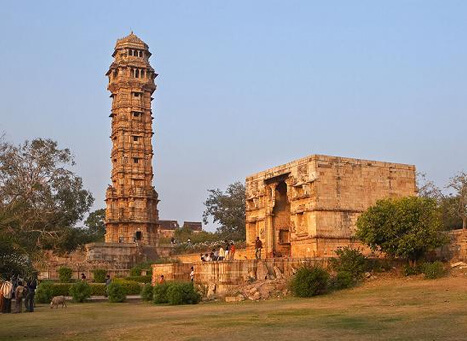
Vijay Stambh, or the Tower of Victory, is an imposing victory monument located within Chittorgarh Fort. It was constructed by the Hindu Rajput king Rana Kumbha of Mewar in 1448 to celebrate his victory over the joint forces of Malwa and Gujarat Sultanates led by Mahmud Khilji.
Dedicated to Lord Vishnu, the tower is a masterpiece of religious and cultural synthesis. Its walls are adorned with hundreds of intricate carvings depicting Hindu deities, seasons, musical instruments, and weapons, making it a veritable 'Encyclopedia of Indian Sculpture'.
A Saga of Triumph
1440 - 1448
The Vow of Victory
Following the battle of Sarangpur, Rana Kumbha vowed to build a monument that would stand for eternity. For eight long years, the finest architects and sculptors of Mewar worked to raise this 122-feet high sandstone marvel.
Medieval Era
The Beacon of Mewar
For centuries, the tower served as a lighthouse of Rajput pride. Its nine stories were visible from miles away, signaling the strength and artistic sophistication of the Mewar dynasty to all who approached the fort.
Present Day
A National Treasure
Today, Vijay Stambh is recognized as one of the most remarkable examples of religious architecture in India. It attracts thousands of scholars and travelers who come to witness the 'sthana' (place) where history meets stone.
Celestial Architecture
The Foundation & Architects
The tower stands on a 47-foot square platform. The names of its chief architects—Sutradhar Jaita and his sons Napa, Puja, and Poma—are immortalized on the fifth floor.
Encyclopedia of Icons
Every inch of the tower is carved with deities from the Hindu pantheon, celestial beings, and scenes from daily life, earning it the title of an 'Encyclopedia of Indian Sculpture'.
Religious Harmony
Reflecting the inclusive vision of Rana Kumbha, the tower features the word 'Allah' inscribed in Arabic on the 3rd and 8th stories, alongside statues of Hindu and Jain deities.